
Losing a tooth changes more than your smile. It changes how you chew, how your jawbone holds its shape, and often how confident you feel talking to people. Dental implants have become the standard replacement for missing teeth because they replace both the root and the crown, not just the visible part of a tooth. This guide walks through what dental implants are made of, how the dental implant procedure actually works, what determines cost, and where dental insurance and financing fit in.

Overview of this article
What Are Dental Implants? An Introduction to the Basics
A dental implant is an artificial tooth root, usually a titanium screw, that a surgeon places directly into the jawbone. Once it has fused with the bone through a process called osseointegration, it acts as a stable foundation for a crown, a bridge, or a full denture. The implant body sits below the gums; a connecting piece called the abutment is attached on top, and the visible dental crown is fixed to the abutment.
Most implant systems today use titanium because the metal bonds directly with bone and has a long track record of success. A smaller share of patients choose ceramic implants made from zirconia, a metal-free material that some people prefer for cosmetic reasons or because of a documented metal sensitivity. Ceramic dental implants cost more than titanium in most practices, largely because the material and milling process require different equipment, but many patients accept the higher cost for the tooth-colored result. You can compare the two materials in more depth on our dental crown page, which also explains how the crown itself is shaped and fitted.
Dental implants differ from removable dentures in one key way: they are anchored surgically rather than resting on the gums, so they do not shift while eating or speaking.
Types of Dental Implant Systems: Endosteal, Subperiosteal and More
There are two main types of dental implant used in modern implant dentistry.
- Endosteal implants are placed directly into the jawbone and are by far the most common type used today. They look like small screws and work for single tooth replacement, multiple teeth, or a full arch.
- Subperiosteal implants sit on top of the jawbone, under the gum tissue, rather than inside the bone. This type is reserved for patients who do not have enough healthy jawbone for a standard endosteal implant and who are not good candidates for bone grafting.
Beyond implant type, patients also choose between different dental implant systems, meaning the specific manufacturer and screw design a practice uses. Systems differ in thread pattern, surface treatment, and abutment compatibility. One widely used dental implant system is Camlog, known for a tube-in-tube connection that many implantologists favor for its fit and long-term stability. The choice of implant system affects both cost and which replacement parts will be available years later, so it is worth asking your provider which system they use before treatment starts.
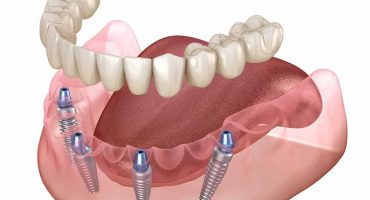
For patients missing an entire arch of teeth, the All-on-4 concept uses four strategically placed implants to support a full fixed bridge, avoiding the need for one implant per missing tooth. Details on that approach, including its cost structure, are covered on our All-on-4 dental implants page.
What Does a Dental Implant Procedure Involve?
The dental implant procedure is a staged process rather than a single visit. A typical sequence looks like this:
- Consultation and imaging, including a 3D scan of the jaw to assess bone volume and plan implant placement precisely.
- Tooth extraction, if a damaged or diseased tooth is still present. Some patients require a healing period before the implant can be placed; others qualify for immediate placement on the same day.
- Bone grafting, if the jawbone lacks sufficient density or height to hold an implant securely.
- Surgical placement of the implant body into the jawbone under local anesthesia.
- A healing period of several months while the implant integrates with the bone.
- Placement of the abutment and the final crown, bridge, or denture.
During dental implant surgery, the surgeon prepares a small channel in the jawbone and inserts the implant with controlled torque, checking primary stability before closing the gums. Clinical protocols for this step typically rely on established implant placement standards, including resonance frequency analysis to confirm the implant is stable enough to begin healing.
Modern practices increasingly rely on 3D printing to produce surgical guides that mark the exact position and angle for each implant before surgery even begins, reducing guesswork during placement and improving accuracy compared to free-hand techniques.
Bone Grafting and Preparing the Jaw for Implant Placement
Bone loss after tooth loss is common. Without the pressure of a natural tooth root, the surrounding jawbone gradually resorbs, sometimes leaving too little bone to support a new implant. Bone grafting adds material, either from the patient's own body, a donor source, or a synthetic substitute, to rebuild volume and density before or during implant placement.
Socket preservation is a related technique used right after a tooth extraction: a bone graft is placed into the empty socket immediately, protecting it from collapsing while the site heals. This can shorten the overall timeline before an implant can be placed and often improves the final result around the implant. Not every patient needs grafting; the decision depends on how much natural bone remains and where in the mouth the implant is planned.
Recovery After Implant Placement: Healing and Osseointegration
Recovery timelines vary, but most patients can expect noticeable swelling and tenderness for the first few days after surgery, manageable with standard pain medication. Soft foods are usually recommended for one to two weeks while the gums close over the surgical site.
The deeper healing process, osseointegration, takes longer: bone cells grow around the implant surface and lock it in place, a process that typically takes two to six months depending on the jaw, the implant system used, and the patient's general health. Smoking, uncontrolled diabetes, and poor oral hygiene all slow healing and raise the risk of implant failure. During this period, follow-up visits let the dentist or implantologist confirm the implant is integrating correctly before attaching the permanent crown.
Once healing is complete, oral hygiene becomes the main factor in long-term success. Brushing around the implant, using interdental brushes, and keeping regular professional cleanings on schedule all reduce the risk of peri-implantitis, an inflammation of the gum and bone around the implant that can lead to failure if untreated. Our professional teeth cleaning guide covers what a maintenance cleaning around implants and natural teeth typically involves.
How Long Do Dental Implants Last?
This is one of the most common questions patients ask before committing to the cost of implant treatment. The implant body itself, the titanium or ceramic screw inside the jawbone, can last for decades if it integrates well and is kept clean. The crown on top has a shorter lifespan: normal wear, grinding, or chipping typically means a crown is replaced after ten to fifteen years, though this varies by material and how the patient cares for it.
Factors that shorten how long dental implants last include untreated gum disease, poor oral hygiene, smoking, and grinding without a protective night guard. Regular dental check-ups catch early signs of trouble, such as bone loss around the implant, before they become serious.
Dental Implants Cost: What Determines the Price
Dental implants cost varies widely depending on the number of implants needed, the material chosen, whether bone grafting is required, and the implant system the practice uses. A single tooth implant with a crown generally costs less than a full-arch solution like All-on-4, simply because fewer implants and less surgical time are involved.
Ceramic dental implants cost more than titanium implants on average, reflecting the material cost and the more specialized milling required for zirconia. Additional costs to budget for include the initial consultation, imaging, any bone grafting, the abutment, and the final crown or bridge, which are sometimes priced separately from the implant itself.
Geographic location and the individual provider's experience also affect price. A dental implant placed by a specialist implantologist in a well-equipped clinic will typically differ in cost from a standard general practice, reflecting differences in training, equipment, and the materials used.
Dental Insurance, Financing and Payment Options for Implants
Dental insurance coverage for implants varies by plan and by country. Many standard plans treat implants as a cosmetic or elective procedure and limit coverage, while some plans cover a portion of the cost when the implant replaces a tooth lost through disease, decay, or an accident. It is worth asking your insurance provider directly whether implant placement, the abutment, and the crown are each covered separately, since plans sometimes cover one part and not the others.
Medical insurance can occasionally apply in specific cases, such as when tooth loss follows an accident or a medical condition, rather than routine decay, so it is worth reviewing both medical and dental policies before treatment. Supplemental dental insurance plans exist specifically to help cover procedures like implants that standard plans exclude; our supplemental dental insurance guide explains what these plans typically include and how to review one before signing up.
Alternatives to Dental Implants: Bridges, Dentures and Crowns
Implants are not the only replacement option, and they are not right for every patient. A dental bridge replaces one or more missing teeth by anchoring an artificial tooth to the natural teeth on either side, without surgery. Our dental bridge page compares bridge types and costs against implants directly.
Full or partial dentures remain a common, lower-cost option for patients missing several or all of their teeth, particularly when the jawbone cannot support implants without extensive grafting. A telescopic denture offers a middle path: a removable prosthesis anchored to natural teeth or implants through a double-crown system, combining some stability of a fixed restoration with the flexibility of a removable one, explained further on our telescopic denture page.
For patients with severe bone loss in the upper jaw who are not candidates for standard implants even with grafting, a zygomatic implant anchors into the cheekbone instead of the jawbone, avoiding the need for extensive bone reconstruction. Our zygomatic implants page covers who qualifies for this option and what the surgery involves.
Benefits for Your Smile and Long-Term Oral Health
Beyond restoring a smile, implants protect the jawbone itself. A missing tooth root means the surrounding bone gradually loses density; an implant, once integrated, provides the same stimulation a natural tooth root would, helping preserve bone volume over the long term. This is one reason implants are often recommended over dentures for patients who want to protect their jaw structure, not just fill a gap.
Implants also protect neighboring healthy teeth. A bridge requires grinding down adjacent teeth to anchor the replacement; an implant does not touch the natural teeth next to the gap at all. For patients who have lost a single tooth, this makes single tooth implants a conservative option compared to a three-unit bridge.
Choosing an Implantologist: Related Questions to Ask Before Treatment
Not every dentist performs implant surgery, and outcomes depend heavily on the surgeon's specific training in oral surgery and implant dentistry rather than general dentistry alone. Questions worth asking before scheduling implant placement include how many implants the provider places per year, which dental implant system they use, what happens if a graft or implant fails, and what the total cost includes.
It also helps to ask what maintenance schedule the practice recommends afterward. Professional guidelines from the American College of Prosthodontists and the Academy of General Dentistry note that biological maintenance for patients with implant-borne fixed restorations should include a full oral examination, hygiene instructions, and hands-on hygiene intervention at scheduled reviews, not just an occasional check.
FAQ
Are ceramic dental implants safe?
Ceramic implants made from zirconia are considered a safe, biocompatible alternative to titanium and are used by implantologists worldwide. They are metal-free, which appeals to patients with a metal sensitivity, and integrate with the jawbone in a similar way to titanium implants, though long-term data is more limited than for titanium.
What are dental implants made of?
Most dental implants are made of titanium, a metal that bonds directly with bone during osseointegration. A smaller number are made of zirconia ceramic, chosen for its white color and metal-free composition. The visible crown on top is typically made of porcelain or a ceramic material shaped to match the natural teeth.
What are the different types of dentists?
General dentists handle routine care such as check-ups, fillings, and cleanings, while specialists focus on narrower fields. Implantologists specialize specifically in implant placement and the surgical and prosthetic planning that goes with it, oral surgeons handle extractions and more complex surgery, and prosthodontists focus on crowns, bridges, and dentures.
Is oral surgery covered by medical or dental insurance?
Coverage depends on the reason for the surgery and the specific plan. Dental insurance may cover a portion of oral surgery tied to disease or decay, while medical insurance sometimes applies when surgery follows an accident or a medical condition rather than routine dental treatment. Reviewing both policies before treatment avoids unexpected costs.
What is a tooth extraction?
A tooth extraction is the surgical removal of a damaged, infected, or badly positioned tooth from the jawbone. It is often the first step before implant placement when the existing tooth cannot be saved, and depending on the case, an implant can sometimes be placed the same day or after a healing period.
What are dental implants?
Dental implants are artificial tooth roots, most often made of titanium, surgically placed into the jawbone to replace a missing tooth. Once integrated with the bone, they support a crown, bridge, or denture, offering a fixed, long-term solution for missing teeth rather than a removable one.
Sources
- Clinical practice guidelines for recall and maintenance of patients with tooth-borne and implant-borne dental restorations — American College of Prosthodontists / Academy of General Dentistry
- Clinical and Radiographic Evaluation of Delayed Dental Implant Placement After Socket Preservation Using Injectable Bone Graft — ClinicalTrials.gov (U.S. National Library of Medicine)
- Dental Implants: What You Should Know — U.S. Food and Drug Administration (FDA)
- Dental Implants — Cleveland Clinic
- Dental Implants (StatPearls) — National Center for Biotechnology Information, NIH
- Dental Implant Procedures — American Academy of Periodontology
- Position Statement: Dental Implants — American College of Prosthodontists
Certified implantologists from our network
Every practice in our network is admitted only after meeting the quality criteria of Leading Implant Centers.
-
 Dr. Abdul Hameed Attar
Impression dental and maxillofacial centre
Mumbai, India
-
 Christian Fastabend
Zahnmed. Tageskl. Dr. Schlotmann ZMVZ GmbH
Dorsten, Germany
-
 Dr. med. dent. Stephan Delschen
DENTEINS – die Zahnärzte Dr. Stephan Delschen
Troisdorf, Germany
Find an implantologist near you




Our Scientific & Advisory Board developed these admission criteria and takes part in reviewing new member practices. Quality criteria · Scientific & Advisory Board
More articles

Methods and material
Read more: All-on-4 treatment concept
All-on-4 treatment concept
The All-on-4 treatment concept allows for complete edentulous fixed dentures, which is based on only four implants. The method provides a fast and secure way to secure dental care without the need for previous bone augmentation.

Methods and material
Read more: Dental Volumetric Tomography (DVT)
Dental Volumetric Tomography (DVT)
Dental volume tomography (DVT) is one of the most advanced methods of X-ray diagnostics. It is an imaging tomography method, in which 3D X-ray images are made. In this way, the examining doctor receives three-dimensional insights into the head structures with the utmost precision. As a result, he is able to examine the oral and jaw area three-dimensionally on all levels, recognizing the finest anatomical structures.