Dental Implants vs Dentures: A Full Comparison Guide
Dental implants and dentures both replace missing teeth but differ in stability, cost and effect on the jawbone. This guide compares candidacy, the procedure, pros and cons, risks, daily care and costs of both options.


Dentures are removable replacement teeth that rest on the gums, while dental implants are titanium posts surgically placed in the jawbone to support a fixed crown or denture. Both restore missing teeth, but they differ in stability, cost, and how they affect long-term bone health. Most patients choose based on budget, the condition of their jawbone, and how much daily maintenance they are willing to accept.
Overview of this article
- Dentures and Dental Implants: Two Paths to Replacing Missing Teeth
- Who Is a Candidate for Dental Implants or Dentures?
- How Does the Dental Implant Procedure Work?
- Pros and Cons: Comparing Dentures and Dental Implants
- What Risks and Side Effects Should You Expect?
- Maintenance and Daily Care After Treatment
- How Do Costs Compare Between Dentures and Dental Implants?
- Why Bone Health Matters for Your Long-Term Smile
- Which Option Is the Right Choice for You?
- Frequently Asked Questions
- Sources
Dentures and Dental Implants: Two Paths to Replacing Missing Teeth
Tooth loss changes more than a smile. It affects chewing, speaking, and the shape of the face. Dentures and dental implants both exist to replace missing teeth, but they take very different approaches to doing it.
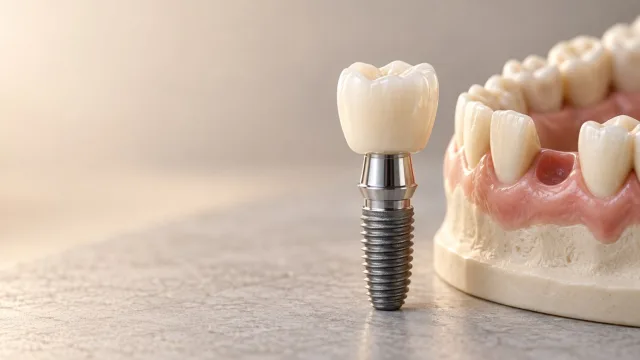
Dentures are removable appliances made of an acrylic base shaped to fit the gums, holding artificial teeth that mimic natural teeth. They can be full or partial, depending on how many teeth are missing. Dental implants, by contrast, are small titanium posts placed surgically into the jawbone, where they fuse with bone over several months before a crown, bridge, or denture is attached on top.
The core difference comes down to support. Dentures rest on the gums and depend on suction, adhesives, or clasps to stay in place. Implants are anchored directly into bone. For a deeper look at how implants are placed and what they cost, see this dental implants guide.
| Feature | Traditional Dentures | Implant-Supported Dentures |
|---|---|---|
| Attachment | Rests on gums | Anchored to implants in jawbone |
| Stability | Can slip during eating or speaking | Secure, minimal movement |
Who Is a Candidate for Dental Implants or Dentures?
Candidacy depends mostly on jawbone condition, gum health, and overall health. Patients with enough bone density and healthy gums are usually good candidates for implants. Those with significant bone loss may need a bone graft first.
Dentures work for patients who are missing most or all of their teeth and who prefer a non-surgical option, or whose health conditions make surgery riskier. Partial dentures suit patients who still have some natural teeth but need to replace a few missing ones without extensive treatment.
Age alone does not rule out implants, but conditions such as uncontrolled diabetes, certain bone diseases, or heavy smoking can affect healing and implant success. A thorough exam, usually including imaging to assess bone density, determines which option fits a given patient.
How Does the Dental Implant Procedure Work?
Placing a dental implant is a multi-step process that typically spans several months from start to finish:
- Initial exam and imaging to assess jawbone density and plan implant placement.
- Tooth extraction, if a damaged tooth is still present, sometimes combined with a bone graft.
- Healing period for the bone graft or extraction site, often lasting a few months.
- Surgical placement of the titanium implant post into the jawbone.
- Osseointegration, the healing phase where bone fuses to the implant, usually taking three to six months.
- Placement of an abutment, a small connector piece attached to the implant.
- Attachment of the final crown, bridge, or implant-supported denture.
Dentures, by comparison, involve a shorter process: impressions of the gums and jaw are taken, the denture is fabricated, and adjustments are made for fit over a few follow-up visits. No surgery is required for traditional dentures, though some patients still need a short healing period after any remaining teeth are removed.
Pros and Cons: Comparing Dentures and Dental Implants
Each option has real benefits and real drawbacks. Weighing them against daily lifestyle and budget usually makes the choice clearer.
Dentures — pros
- Lower upfront cost compared with implants.
- No surgery required for traditional dentures.
- Can be adjusted or remade relatively quickly if fit changes.
Dentures — cons
- Can slip or feel loose, especially with full dentures.
- Do not stimulate the jawbone, so bone loss continues over time.
- May require adhesives and more frequent adjustments as the jaw changes shape.
Dental implants — pros
- Function and feel closer to natural teeth than removable dentures.
- Stimulate the jawbone, helping prevent further bone loss.
- Can last decades with proper care, often described as a long-term solution.
Dental implants — cons
- Higher upfront cost and a surgical procedure.
- Requires adequate jawbone density, or a bone graft beforehand.
- Healing and osseointegration take several months before the final restoration is placed.
What Risks and Side Effects Should You Expect?
Surgical placement of implants carries risks similar to other minor oral surgery procedures: infection, delayed healing, or in rare cases, implant failure if osseointegration does not succeed. Smoking and poorly controlled diabetes increase these risks.
Dentures carry fewer surgical risks since no surgery is involved for most patients, but they bring their own problems. Ill-fitting dentures can cause sore spots on the gums, and chronic slipping can lead to difficulty chewing certain foods. Over years, as the jawbone continues to shrink, dentures often need to be relined or replaced to maintain a proper fit.
Both options can fail without proper care. Neglecting oral health around implants can lead to a condition similar to gum disease around the implant site, while dentures left uncleaned can contribute to gum irritation and bad breath.
Maintenance and Daily Care After Treatment
Dentures need to be removed nightly, cleaned with a denture brush, and soaked according to the manufacturer's instructions. Skipping this daily habit allows bacteria to build up, which can irritate the gums underneath.
Implants are cared for more like natural teeth: brushing, flossing around the abutment, and regular dental visits for professional cleaning. A professional teeth cleaning every six months helps catch early signs of gum irritation around implants before they become a bigger problem.
Implant-supported dentures require a mix of both: the denture itself is removed for cleaning, while the implants and surrounding gums need daily attention similar to natural teeth.
Both options require regular check-ups so the dentist can confirm the fit and check for signs of bone loss or gum changes. Patients with partial dentures also need to keep remaining natural teeth healthy, since those teeth bear extra load.
How Do Costs Compare Between Dentures and Dental Implants?
Dentures generally cost less upfront than implants, which makes them an affordable option for patients who need to replace several teeth at once without a large initial expense. Implants cost more upfront because the price covers the surgical procedure, the implant post itself, and the final crown or denture.
Dentures typically need relining, adjustments, or full replacement every several years as the jawbone and gums change shape. A detailed breakdown is available in this dental implant cost guide, and patients comparing a full arch replacement can also review full mouth dental implants cost for multi-tooth cases.
Insurance coverage varies and depends on the specific plan. Patients should confirm coverage details directly with their insurance provider before committing to either option.
Why Bone Health Matters for Your Long-Term Smile
Jawbone health is the hidden factor behind nearly every decision in this comparison. When a tooth is lost, the bone that once supported its root no longer receives the pressure it needs, and it begins to shrink. This bone loss continues over the years with dentures alone, since dentures sit on top of the gums rather than inside the bone.
The titanium post placed in the jawbone transmits chewing pressure into the bone, which helps maintain bone density.
Patients who have worn dentures for many years sometimes find they no longer have enough bone density for implants without a bone graft. An exam with imaging can determine whether sufficient jawbone remains, which is a key step before any implant is surgically placed.
Which Option Is the Right Choice for You?
There is no single right choice that fits every patient. The decision usually comes down to three questions: how much bone remains in the jaw, what budget is available, and how much stability is needed for daily eating and speaking.
Patients who want the closest experience to natural teeth, who have adequate bone density, and who can commit to the upfront cost often lean toward implants or implant-supported dentures. Patients who need a faster, more affordable solution, or who are not candidates for surgery, often choose traditional or removable dentures instead.
It is also common for patients to start with dentures and move to implants later, once finances allow or once they decide the stability of implants matters more to their daily comfort. A consultation that includes imaging and a review of jawbone density is the most reliable way to compare dentures vs implants for a specific case, rather than relying on cost alone.
Frequently Asked Questions
Traditional Dentures vs Implant-Supported Dentures: What's the Difference?
Traditional dentures are fully removable and rely on the shape of the gums and jaw for retention. Implant-supported dentures still look like dentures, but they clip onto two or more implants placed in the jawbone, which holds them securely during eating and speaking.
Traditional dentures can shift when biting into firm foods, and many patients use adhesives to reduce slip.
What Type of Dentist Does Implants and Dentures?
Dentures are typically fitted by a general dentist or prosthodontist, while dental implants are surgically placed by an oral and maxillofacial surgeon, periodontist, or implantologist with specific training in implant surgery. Many patients see a general dentist first and are then referred for the surgical implant portion of treatment.
How Long Do Dentures and Implants Actually Last?
Traditional dentures typically last around five to eight years before needing relining or replacement as the jaw and gums change shape. Dental implants, once successfully integrated with the jawbone, can last decades with proper care, though the crown on top may eventually need replacement, similar to how a dental crown wears over the years — more detail on implant lifespan is covered in this guide on how long dental implants last.
Can You Get Implants After Dentures?
Yes, many patients wear dentures for years before switching to implants. The main requirement is enough jawbone density to support an implant; patients who have lost significant bone may need a bone graft first before implants can be surgically placed.
Sources
Removable and fixed implant-supported prostheses in edentulous jaws: post-loading implant loss — Clinical Oral Implants Research (via PMC)
Denture Care and Maintenance — American Dental Association
Dentures FAQ — American College of Prosthodontists
Dentures (false teeth) — NHS
Dental Implants: What You Should Know — U.S. Food and Drug Administration
Dental Implants — Cleveland Clinic
Dental Implant Procedures — American Academy of Periodontology
What Is a Periodontist? — American Academy of Periodontology